
Commentary on communication, media, and national security and resilience
Don’t Shoot the Messenger: What the Starmer Row Is Really Telling Us
Media, power, and Britain’s damaging addiction to political instability.
The row around Keir Starmer isn’t simply media excess or Westminster gossip. It reflects deeper, unresolved tensions within British politics — signals that journalists are amplifying rather than inventing. Dismissing the coverage as hysteria risks missing what’s actually happening beneath the surface.
What’s really on display is a familiar pattern: pressure builds, unity is performed, and instability returns at the first electoral test. Until that cycle is broken, Britain remains trapped in a rinse-and-repeat politics that carries real economic and reputational costs.
https://open.substack.com/pub/rodwhiting/p/dont-shoot-the-messenger-what-the?
We Need a Ministerial Department for National Resilience
Resilience isn’t just about recovery - it’s about readiness.
With global tensions rising and public confidence eroding, the UK’s resilience strategy remains fragmented across departments. Defence, cybersecurity, infrastructure, and even public trust all form part of the same fabric - yet we treat them as separate entities.
As Dr Katharine A. M. Wright of RUSI argues, “Societal resilience must be seen as central, not separate, to national defence.” Until people feel secure in their daily lives, they can’t be expected to feel invested in national defence.
Other nations are ahead of us. Finland teaches citizens to recognise disinformation. Switzerland regularly updates its national risk plan and maintains one of the world’s strongest civil-protection systems.
The UK has made progress - the reshaped Joint Service Cyber & Specialist Operations Command is an important step - but the approach remains piecemeal. What’s missing is leadership: a single point of accountability to unite health, education, infrastructure, and security under a single coherent strategy.
It’s time to consider a Ministerial Department for National Resilience - led by a Secretary of State and built on clear communication between government and the public, because national strength can’t be built on individual fragility.
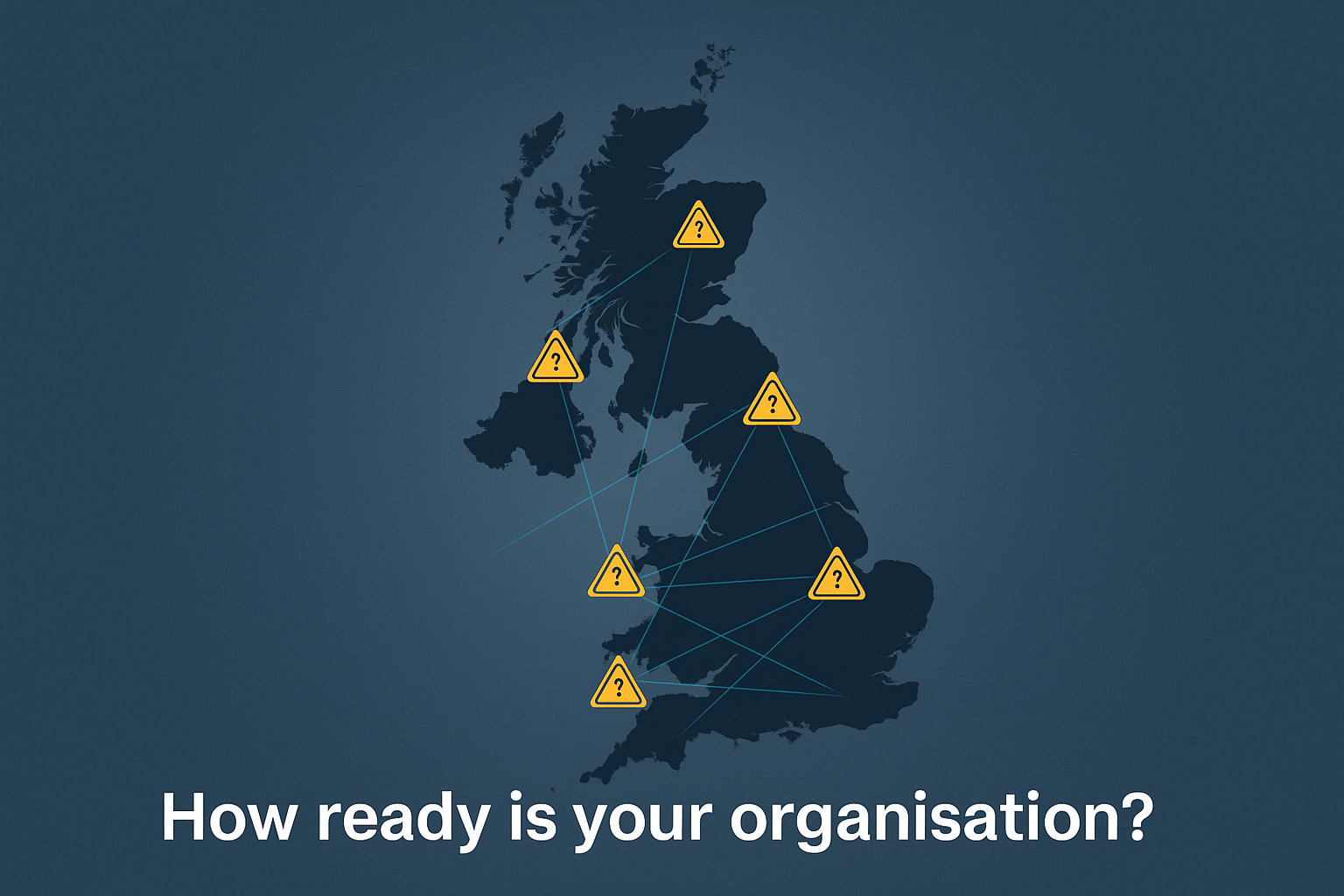
Question: How ready is your organisation — and who’s leading that conversation?
👉 Read the full article and post your comments on LinkedIn
When Politics Turns Its Back on the Media
Banning media outlets is the failed strategy of aggrieved football managers, not the hallmark of a serious political organisation. While Nigel Farage appears to benefit from a slick communications team, the same cannot be said of the wider Reform Party.
The decision by Reform’s ruling group at Nottinghamshire County Council to cut ties with local media outlet Nottinghamshire Live is a move that reveals more about political naivety than strategy.
Nothing new, of course. I well remember football managers in my early reporting days refusing to talk to the press after a bad run of results. It rarely worked. In fact, it often magnified the criticism, casting the club as petty and defensive.
The same dynamic is now playing out here. National outlets such as The Guardian and ITV have seized on the story, amplifying Reform’s misstep far beyond the original local dispute.
When you’re in power, the scrutiny is greater, not less. The wiser approach is almost always to engage, so you’re in the room to defend your record. Choosing silence may feel satisfying in the short term, but it usually ends up strengthening your critics’ hand.
👉 Read the full discussion and add your responses on LinkedIn

The Creator’s Dilemma
AI safety, sovereign power and the limits of restraint

The debate around AI safety is often framed as a technical challenge. In reality, it is a question of power — who holds it, who shapes it, and whether it can ever be meaningfully constrained once released.
As states and corporations race to build ever more capable systems, the idea of restraint becomes harder to sustain. The dilemma is no longer theoretical: it sits at the intersection of sovereignty, security, and competition — and it may already be beyond our control.
https://open.substack.com/pub/rodwhiting/p/the-creators-dilemma